Blog·June 11, 2026·5 min read
Why a Spreadsheet Won't Save You When Gear Goes Missing
Spreadsheets and handwritten notes are the most common ways guitarists track their gear, but they fall apart the moment something goes wrong. When a guitar is stolen, damaged, or disputed in a sale, insurers and law enforcement need more than a cell in a Google Sheet -- they need serial numbers, photos, purchase prices, and condition notes tied together in a single verifiable record. Studies show that only about 15% of stolen musical instruments are ever recovered, largely because owners can't produce adequate documentation at the time of loss. Purpose-built gear cataloging tools like Fretfolio store every detail that matters -- serial number, appraisal value, photos, provenance -- in one place, accessible from any device, and exportable as a PDF for insurance claims. The difference between a spreadsheet and a proper catalog isn't just convenience; it's whether you can prove what you owned when it counts most.
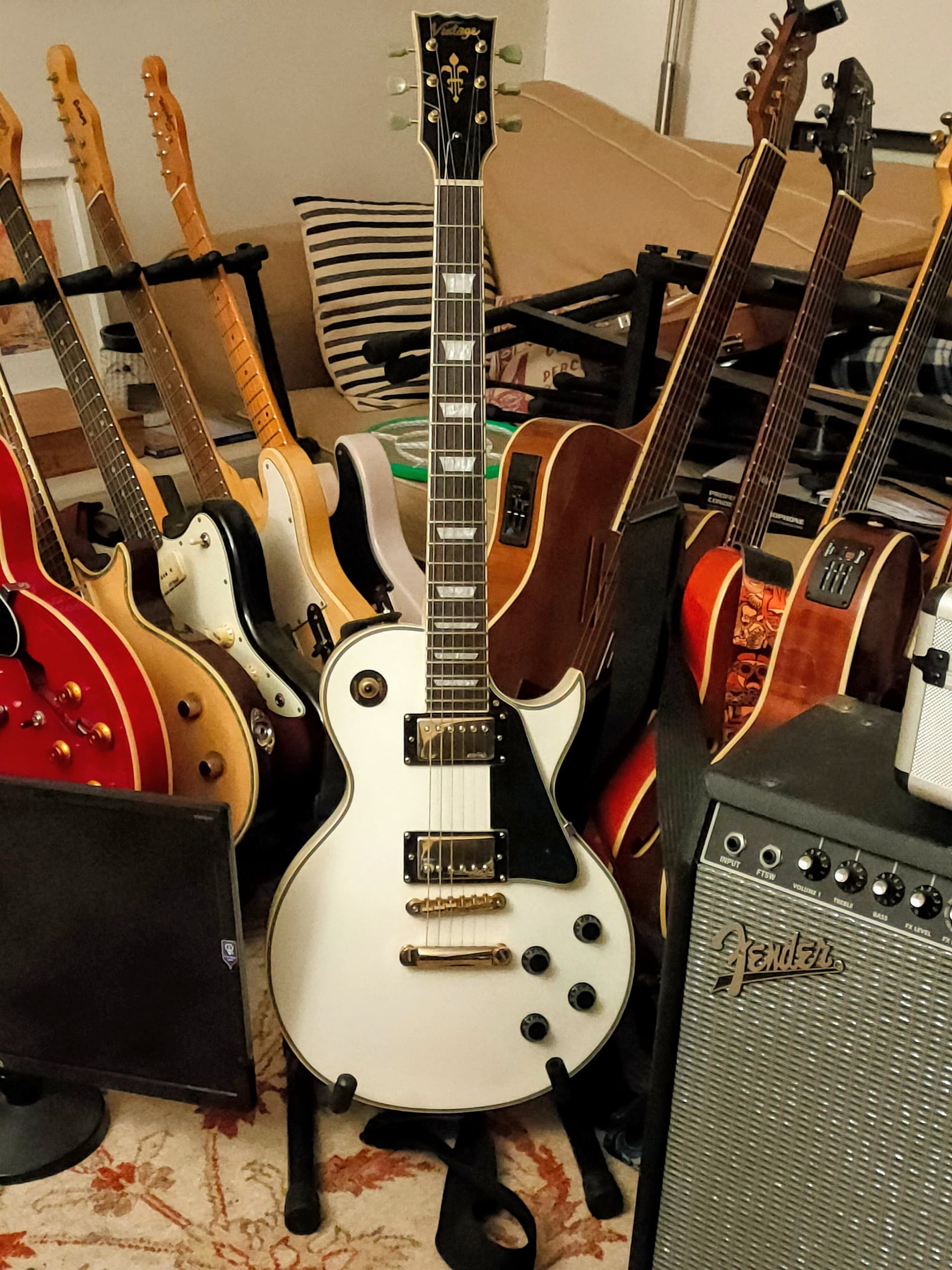
When a guitar gets stolen, damaged in a flood, or disappears during a move, the first thing your insurance company asks for is documentation. Not a vague memory of what you paid. Not a text thread with a friend who helped you carry it in. A serial number, a purchase price, photos showing condition, and ideally an appraised value. If your catalog lives in a spreadsheet, you are probably not ready for that conversation.
Why Do People Still Use Spreadsheets to Track Gear?
The honest answer is habit and low friction. Opening a spreadsheet costs nothing and requires no learning curve. For someone with two or three guitars, a simple list feels like enough. But a spreadsheet has no concept of a serial number field versus a model name field. It doesn't attach photos (easily). It doesn't export a formatted insurance document. And it doesn't travel well -- a file sitting on one laptop is not necessarily accessible when you need to file a claim from a hotel room after a tour date goes wrong.
Handwritten notes are even less reliable. A notebook can be lost in the same fire or flood that damaged the gear. Phone notes apps are a step up, but they offer no structure, no photo organization, and no way to share a clean record with a buyer or an adjuster.
What About Using AI to Generate a Gear List?
Some players have started asking AI chatbots to help them organize gear information. The approach usually involves pasting specs or describing instruments, and having the AI format a list. It sounds clever, but the output is only as good as what you feed it -- and it still lives nowhere permanent. There is no persistent record, no photo attachment, no serial number validation, and no export format that an insurance company will recognize as documentation. An AI-generated list is still just a list.
The underlying problem with every manual method is the same: they require you to maintain discipline over time, across every acquisition and sale, with no reminders and no structure enforcing completeness. Most people don't. According to a 2023 survey by the Music Trades, the average serious guitar collector owns between 8 and 15 instruments -- a number that outpaces what most people can accurately recall from memory, let alone maintain in a self-built spreadsheet.
What Information Actually Matters for an Insurance Claim?
Insurers handling instrument claims typically ask for several specific data points: the make, model, and year; the serial number; the purchase price and date; the current appraised or replacement value; photos showing condition before the loss; and any provenance documentation for vintage pieces. Missing even one of these can delay or reduce a payout.
The National Insurance Crime Bureau reports that theft recovery rates for personal property drop sharply when owners cannot provide serial numbers at the time of the police report. For musical instruments specifically, recovery rates are estimated at around 15% -- a number that reflects both under-reporting and inadequate documentation rather than law enforcement failure alone. A serial number on record changes that picture significantly.
How Does a Purpose-Built Catalog Differ From a Spreadsheet?
A purpose-built gear catalog enforces structure by design. Fields exist for the things that matter: serial number, body wood, pickup configuration, purchase price, appraised value, condition notes. Photos attach directly to each item, not floating in a camera roll you'll have to search later. Records are stored in the cloud and accessible from any device.
When something goes wrong, you're not rebuilding a record from scattered sources. You're opening a file that's already complete.
Gear Transfer is another capability that manual methods can't replicate. When you sell an instrument, you can invite the buyer to claim a full copy of the item's record -- serial number, photos, history and all. That kind of provenance documentation adds tangible value to a sale and protects both parties from disputes after the fact.
What Happens When You Try to Sell Without Documentation?
Buyers in the vintage and used gear market have grown more cautious. A 2024 report from Reverb noted that listings with detailed descriptions and multiple photos sell faster and at higher prices than comparable listings without them. Documentation isn't just protective -- it's a selling asset. A guitar with a clear, verified history is easier to price, easier to sell, and less likely to be questioned.
Conversely, a seller who can't produce a serial number or explain a guitar's provenance raises flags. Organized records reduce friction on both ends of a transaction.
How Fretfolio Fits Into This
Fretfolio was built around exactly the scenarios where spreadsheets break down. Each item in your collection gets its own record with type-specific fields -- the fields that matter for a guitar are different from those for a pedal or an amp, and the app reflects that. Photos attach to each item, and you can designate a hero image for quick identification. Appraised value and purchase price are stored privately, always. At the Collector tier, every item exports as a PDF with photos included -- the format insurers actually ask for.
Starting a catalog on Fretfolio is free for up to 10 items. If you have been meaning to get your gear properly documented and keep putting it off because the setup feels like work, this is the version of that task that takes minutes instead of an afternoon -- and actually holds up when something goes wrong.

