Gear Trends·August 19, 2026·6 min read
Tokai Guitars: Are Vintage Japanese Copies Appreciating in 2026?
Vintage Tokai guitars, particularly the Les Paul-style Love Rock and Strat-style Springy Sound models built in Japan between 1978 and 1988, are among the most quietly appreciating instruments in the collector market in 2026. Once dismissed as mere copies, these guitars are now recognized for their exceptional build quality, aged tonewoods, and historical significance as the instruments that reportedly pushed Gibson and Fender to improve their own quality control in the early 1980s. According to Reverb's 2026 market data, average sale prices for late-1970s Tokai Love Rock models have climbed roughly 34 percent over the preceding three years, with premium-grade examples regularly clearing $2,000 to $3,500. Collectors are drawn to the tight fit and finish, hide-glue neck joints on certain models, and the relative scarcity of clean survivors. For instrument collectors tracking value trajectories, Tokai's vintage Japanese-made catalog represents one of the most compelling cases for under-the-radar appreciation currently visible in secondary market data.
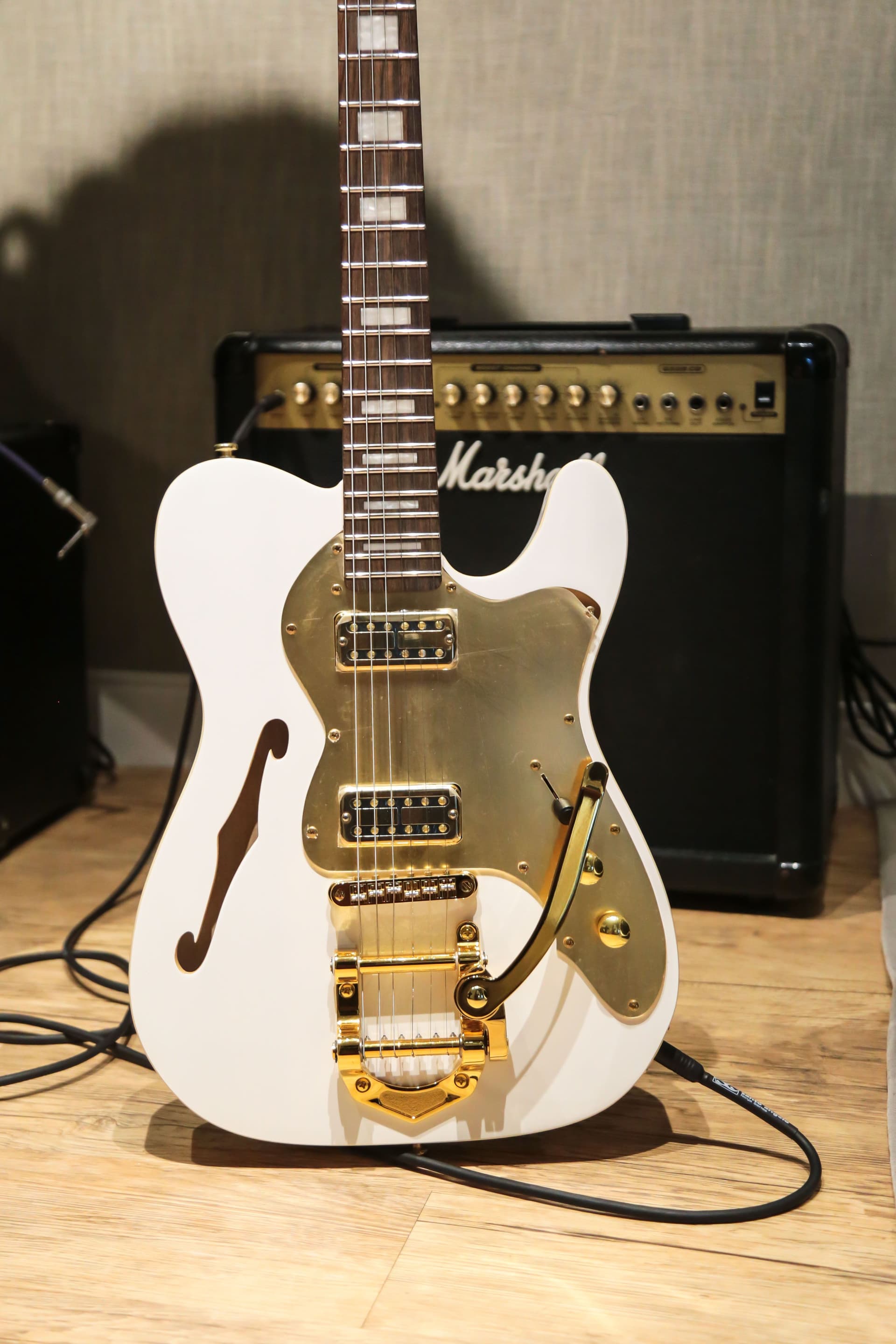
What Are Vintage Tokai Guitars and Why Are Collectors Interested in 2026?
Vintage Tokai guitars, specifically the Japanese-made models produced between roughly 1978 and 1988, are quietly becoming one of the most talked-about appreciation stories in the collector instrument market in 2026. Built in Hamamatsu, Japan, by a company with deep roots in acoustic instrument manufacturing, Tokai's electric guitars were originally marketed as affordable alternatives to American Fenders and Gibsons. Decades later, they are being reappraised not as substitutes but as significant artifacts in their own right, prized for craftsmanship that rivals and occasionally surpasses the originals they were modeled after.
The two models that drive the most collector interest are the Love Rock (a Les Paul-style instrument) and the Springy Sound (a Stratocaster-style instrument). Both were manufactured during a period when Japanese luthiery was reaching a technical peak, and both feature construction details that are difficult to find at any price point today, including hand-fitted parts, quality-selected tonewoods, and in some Love Rock variants, traditional hide-glue neck joints.
How Much Have Tokai Guitar Prices Risen?
The numbers are hard to ignore. According to Reverb's 2026 market data, average realized sale prices for late-1970s Tokai Love Rock guitars have increased approximately 34 percent over the past three years, with clean, all-original examples from 1979 to 1982 regularly selling between $2,000 and $3,500 on the open market. Early Springy Sound models with original tremolo hardware and intact headstock decals are tracking similarly, with dealer asking prices in the $1,200 to $2,200 range depending on finish condition and provenance.
A separate analysis published by Vintage Guitar Magazine's price guide updates in mid-2026 noted that "lawsuit era" Japanese guitars as a category have outperformed the broader vintage electric guitar market for the fourth consecutive year, with Tokai and Greco leading the segment. This sustained momentum suggests the appreciation is structural rather than speculative.
What Makes Vintage Tokai Guitars Collectible?
Several factors converge to make these instruments genuinely collectible rather than simply affordable alternatives to pricier American originals.
Construction quality. Tokai's Hamamatsu factory in the late 1970s benefited from skilled labor, seasoned wood stocks, and a culture of precision that translated directly into the guitars. Neck profiles on Love Rock models from 1979 and 1980 are frequently described by players as among the most comfortable vintage-style profiles available. Fret work and nut cuts on surviving originals regularly impress technicians who encounter them during restoration work.
Historical significance. There is a well-documented narrative in guitar historiography that Tokai's copies were accurate enough and high-quality enough to alarm Gibson and Fender directly. Gibson's response reportedly included tightening quality control and filing legal challenges that led to the broader "lawsuit era" designation. Owning a guitar that demonstrably influenced the manufacturing practices of the American industry's two dominant companies carries a particular collector appeal.
Scarcity of clean survivors. Unlike American vintage guitars, which have benefited from decades of focused collector attention and preservation infrastructure, many Tokai instruments were used heavily, modified without documentation, or simply discarded as fashions changed. Clean, all-original examples with matching cases are genuinely scarce, and scarcity is a fundamental driver of long-term value.
Player demand feeding collector demand. A pattern visible in the Stratocaster and Telecaster market over the past two decades is now playing out with Tokais: players discovering the instruments for their tone and playability create a demand floor that collector buyers then build upon. That dual demand base tends to produce stable, sustained appreciation rather than the volatile spikes associated with purely speculative collecting.
Which Tokai Models Should Collectors Prioritize?
For collectors entering the market in 2026, a few specific models represent the strongest combination of current value, appreciation potential, and historical significance.
The Love Rock LS-50 and LS-80 from 1978 to 1982 are considered the core collectible tier. These featured mahogany bodies with carved maple tops, and the better-spec LS-80 included higher-grade maple and more elaborate binding. Original Tokai-manufactured humbuckers in these guitars have become a sub-market of their own, with players seeking them as pickup upgrades for other instruments.
The Springy Sound ST-80 from the same era is the Stratocaster equivalent, featuring alder or ash bodies, three-layer pickguards, and Tokai's own single-coil pickups wound to period-correct specifications. Sunburst examples with intact original tremolo arms command premiums.
Slightly more accessible entry points include the Breezysound (a Telecaster-style model) and the Hard Puncher bass, which has received renewed editorial attention in 2026 following a prominent gear publication review that highlighted its vintage credentials and current collectibility.
What Are the Key Risks for Tokai Collectors?
No market appreciation story is without risk factors, and Tokai collecting has specific pitfalls worth understanding.
Modification is the primary concern. These guitars were working instruments for decades, and a significant percentage of surviving examples have had pickups swapped, tuners replaced, or necks refinished. The value differential between an unmodified original and a heavily modified example can be 40 to 60 percent, making careful condition assessment essential before any purchase.
Fake or mislabeled examples are also an emerging issue as prices rise. Some later Korean-made Tokai instruments have been rebranded or misrepresented as Japanese originals. Knowing the serial number ranges, headstock logo variants, and pot date codes specific to Japanese production is increasingly important.
Finally, the category still lacks the deep reference infrastructure that American vintage guitars benefit from. Auction house specialist knowledge is patchy, and some platforms still underprice or misdescribe these instruments, which cuts both ways: it creates opportunity for informed buyers but complicates accurate appraisal.
How Fretfolio Helps Collectors Track Tokai Values
If you have a Tokai Love Rock, Springy Sound, or any other vintage Japanese-made Tokai in your collection, your Fretfolio collection page can pull in current market comparables through the integrated Reverb market tracker, letting you monitor the appreciation curve in real time rather than waiting for periodic price guide updates. As this segment continues to attract more collector attention, having an accurate, timestamped record of your instrument's specifications and condition documentation will matter increasingly when it comes time to sell or insure.
Track your gear's value with Fretfolio
Catalog your collection, monitor market prices via Reverb, and generate shareable collection pages — free to start.
Start your free collection

